




Recovering well after a knee replacement isn’t about doing everything perfectly it’s about a handful of habits done consistently: sticking to the rehab plan, walking with the right support, staying on top of pain and swelling, protecting the incision, and knowing which warning signs mean you should call your care team. How quickly any of this happens depends a lot on the individual age, overall health, the specific procedure, and how the body responds to therapy all play a role. Below is a practical rundown of what tends to matter most during at-home recovery.
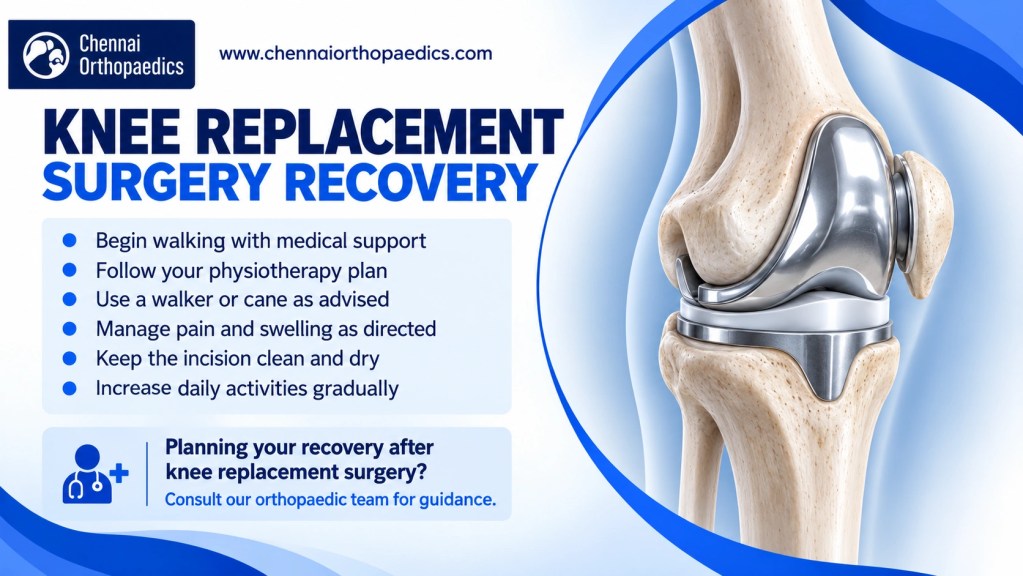
What Actually Helps Recovery Move Forward
Stick to your own physical therapy plan.
It can be tempting to look up generic knee recovery exercises online, but the ones your physiotherapist gives you are built around your specific surgery and progress. Rehab is what rebuilds strength and range of motion, and it’s also what gets you walking confidently again. If an exercise causes sharp pain or triggers noticeable swelling, that’s a signal to pause and flag it not push through it.
Walk — but build up gradually
Most people start walking with help not long after surgery, and a walker or cane usually sticks around longer than patients expect, which is normal. Short walks with rest in between tend to work better than trying to power through longer distances too soon. It’s also worth resisting the urge to compare your pace to someone else’s recovery story; the timeline genuinely differs from person to person.
Stay ahead of pain and swelling rather than reacting to it
Take medication exactly as prescribed — don’t adjust the dose yourself even if you’re having a good or bad day. Ice, elevation, and light ankle movements can help, but only within what your surgeon or physio has actually recommended for you. If swelling or pain seems to be trending the wrong way instead of easing off over time, that’s worth a call, not a wait-and-see approach.
Making the House Safer for Recovery
A lot of setbacks happen at home simply because the environment wasn’t adjusted first. A few things worth doing before or right after you’re discharged:
• Clear away loose rugs, cords, or anything else that could cause a trip
• Keep things you use often phone, water, medications within arm’s reach
• Install or use handrails, and stick to non-slip shoes and any mobility aids you were given
• Follow the discharge instructions for keeping the incision clean and dry
• Line up help for stairs, bathing, cooking, or anything physically demanding
• Actually keep the follow-up and physio appointments, even the ones that feel routine
Things Worth Actively Avoiding
• Stopping medication or blood-clot prevention on your own — even if you’re feeling fine
• Putting creams or lotions near the incision unless a clinician has approved it
• Driving while on opioid pain medication, or before you’ve regained solid control of the leg
• Twisting suddenly, lifting anything heavy, or jumping into high-impact activity
• Skipping ahead in the exercise progression without your surgeon or physio signing off
When It’s Time to Call the Doctor
Some symptoms are worth monitoring; others need a call right away. Reach out if you notice:
• Fever, chills, or a general sense of feeling unwell
• Increasing redness or drainage around the incision
• Worsening calf pain, tenderness, or swelling that’s isolated to one side
• Sudden chest pain or shortness of breath
• Pain or swelling that isn’t settling despite doing everything you’ve been told to do
That last one about chest pain or breathing trouble deserves its own emphasis: that’s not something to sit on until your next appointment. It needs urgent medical attention.
Frequently Asked Questions About Knee Replacement Surgery Recovery
How long does recovery take after knee replacement surgery?
Walking usually starts early on, and day-to-day activities come back in stages after that. Strength and mobility can keep improving for months — there’s no single fixed timeline that applies to everyone.
When can I drive after knee replacement surgery?
That’s your surgeon’s call to make, not a date you pick yourself. You’ll need to be off impairing pain medication and have reliable control of the operated leg.
When does physical therapy begin after knee replacement surgery?
Often within the first day or two after surgery, under medical supervision, with the exercises tailored to where you’re at.
How often should I walk after knee replacement surgery?
Short, frequent walks generally beat occasional long ones use your walker or cane as needed, and increase distance gradually as your team advises.
How can I reduce swelling after knee replacement surgery?
A combination of prescribed medication, ice, elevation, and gentle ankle movement, but always within what your medical team has recommended. Swelling that keeps building instead of easing off needs to be checked out.
Supporting a Safe Recovery After Knee Replacement Surgery
Steady rehab, gradual increases in activity, careful pain management, and paying attention to warning signs are what genuinely support a safe recovery. Your surgeon’s specific instructions should always take priority over general guidance like this recovery plans really are individual.
Leave a Reply